// DIRECT ANSWER
Forged wheels are made by cutting a solid aluminum billet, hot-forging it under high pressure into a blank, heat-treating it for strength, CNC machining the design, drilling the fitment, then finishing, inspecting and testing each wheel.
If you buy forged wheels for a brand or dealership, knowing how they are made helps you write better specifications, understand quotes and explain the value to your customers. Here is the forged wheel manufacturing process step by step, from the factory floor.
The forged wheel manufacturing process at a glance
| Step | What happens | Why it matters to buyers |
|---|---|---|
| 1. Billet cutting | A solid aluminum alloy bar (commonly 6061-T6) is cut to the weight needed for the wheel | Material grade and billet weight drive strength and cost |
| 2. Heating | The billet is heated to forging temperature | Even heating gives a consistent grain structure |
| 3. Hot forging | A high-tonnage press forms the billet into a wheel-shaped blank in closed dies | Forging aligns the grain flow, giving strength with less material |
| 4. Spinning / flow forming (some designs) | The barrel area is stretched to its final width | Allows wider barrels and controls weight |
| 5. Heat treatment | Solution treatment and artificial aging (T6) | Brings the alloy to its rated strength |
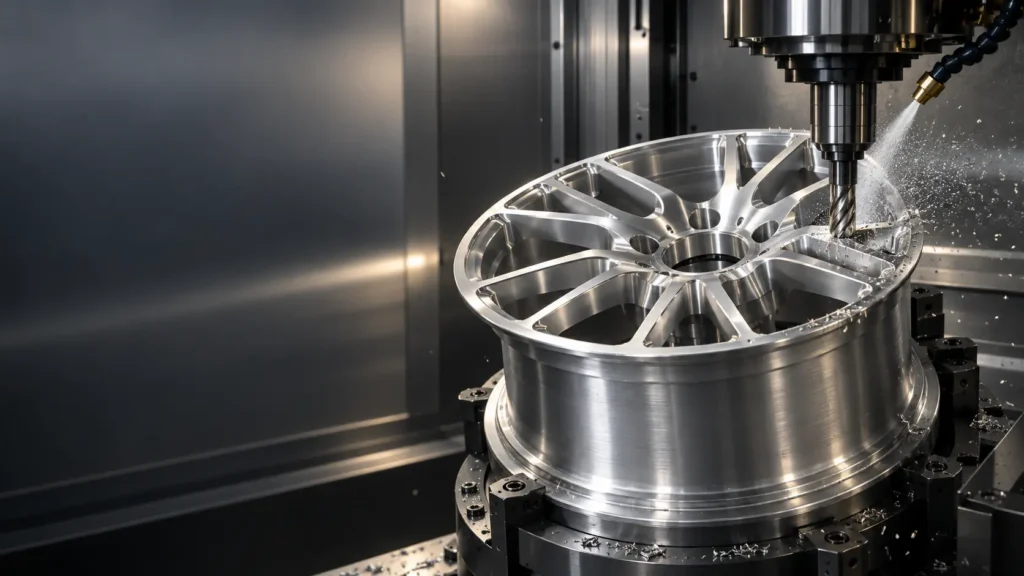
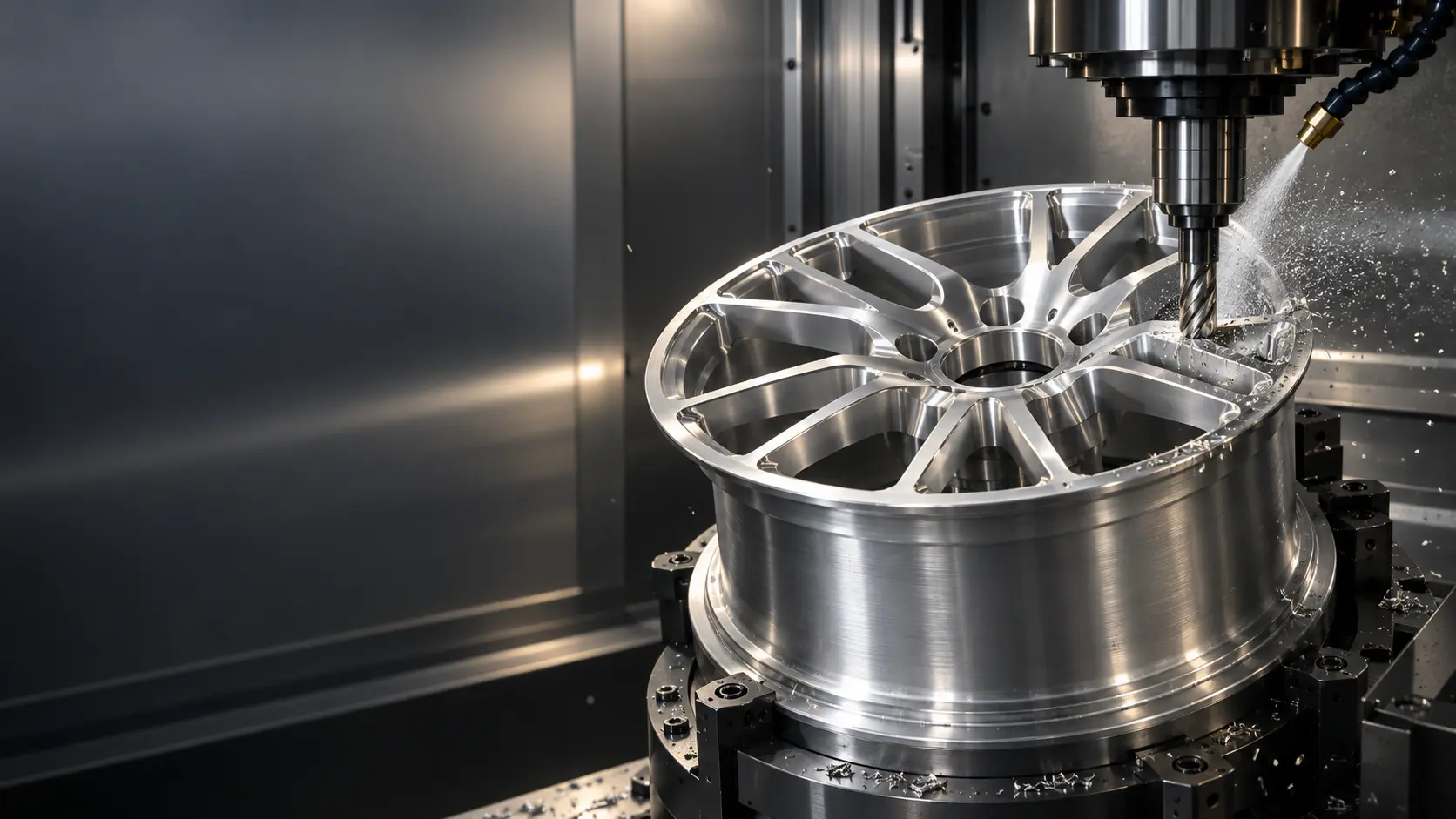
| 6. CNC machining | Lathes cut the profile; milling centers cut spokes, windows and concavity | Your design, weight and concavity are created here |
| 7. Drilling and fitment | PCD bolt holes, center bore, valve hole and offset are machined | Correct fitment for your vehicle platform |
| 8. Finishing | Painting, powder coating, brushing, polishing or two-tone | Look and corrosion protection |
| 9. Inspection and testing | Dimensional checks, runout, balance, and load-rating tests to the required standard | Safety and fewer returns |
Step by step
1–3. From billet to forged blank
Everything starts with the alloy. Most forged wheels use 6061-T6 aluminum; some performance programs use 7075-T6. See 7075-T6 vs 6061-T6 forged aluminum. The billet is heated and pressed in closed dies into a blank. This is the step that separates forged wheels from cast wheels: forging compresses the metal and aligns its grain, which is why forged wheels can be lighter for the same strength. Compare the methods in forged vs flow formed vs cast wheels.
Some buyers machine their own designs and only buy the forged part. For them we supply forged wheel blanks.
4–5. Shaping the barrel and heat treatment
Depending on the design, the barrel may be spun or flow formed to its final width. The part is then heat treated to the T6 temper. Skipping or rushing heat treatment is one of the ways low-cost suppliers cut corners, so ask how it is controlled.
6–7. CNC machining and fitment
This is where most of the time and cost goes. Lathes turn the wheel profile, then multi-axis milling cuts the spoke design, windows and concavity. Finally the bolt pattern (PCD), center bore and offset are machined. Deep concave or complex spokes take longer. See concavity and spoke design and offset, PCD and center bore explained.
8. Finishing
Finishes range from gloss and satin paint to brushed, polished and two-tone combinations. The finish affects both price and lead time. Read custom wheel finish types.
9. Inspection and testing
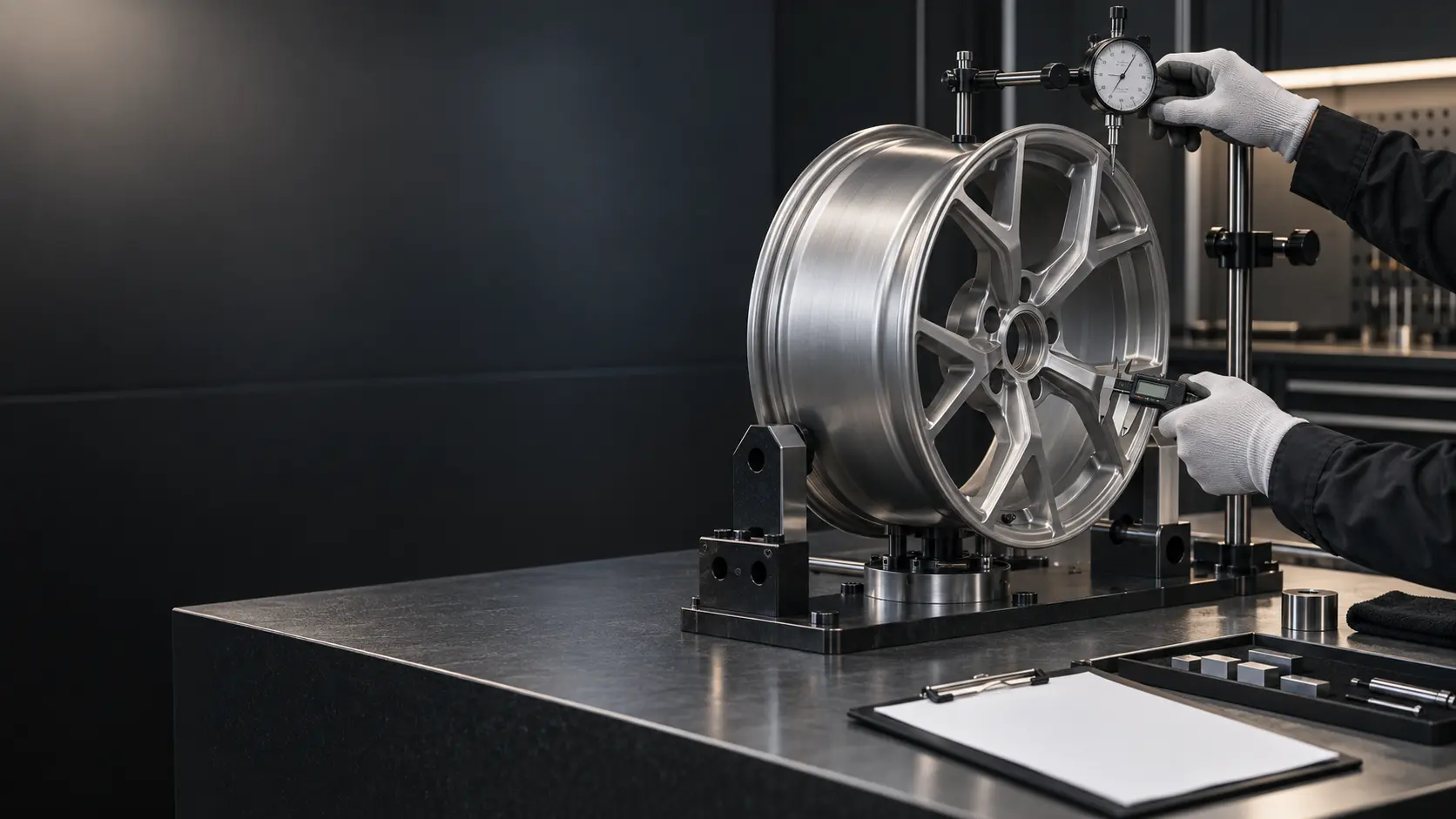
Each wheel should be checked for dimensions, runout and balance before packing. For load ratings and certification, buyers usually ask about JWL / VIA (Japan), TÜV (Germany) and SAE test methods such as impact, radial fatigue and cornering fatigue. Learn what each covers in forged wheel load rating: JWL, VIA and TÜV.
What the process means for your order
- Price: billet weight, CNC time and finish complexity are the main cost drivers.
- Lead time: forging and heat treatment are fixed steps; complex machining and multi-step finishes add time. See forged wheel lead time.
- Quality: ask a supplier how they control heat treatment and which tests they can document.
- Specification: send a clear drawing or spec sheet. See how to read a forged wheel drawing and our RFQ checklist.
Looking for a forged wheels manufacturer? We make monoblock, 2-piece and 3-piece custom forged wheels from 1 set. See our forged wheel programs or read how to vet a forged wheel factory.
Forged Wheel Manufacturing FAQ
How are forged wheels made?
A solid aluminum billet is heated and pressed into a blank, heat treated to T6, then CNC machined, drilled for fitment, finished, inspected and tested.
Why are forged wheels stronger than cast wheels?
Forging compresses the aluminum and aligns its grain structure, so a forged wheel can be lighter than a cast wheel of similar strength.
What aluminum is used for forged wheels?
6061-T6 is the most common alloy. Some performance programs use 7075-T6, which is stronger but harder to machine and more expensive.
Which step takes the longest?
CNC machining usually takes the most time, especially for deep concave or complex spoke designs and multi-step finishes.
What is your minimum order for custom forged wheels?
Our MOQ is 1 set. Send your vehicle, size, offset, finish and quantity for a quote.
Get a Quote From a Forged Wheels Manufacturer
Send your vehicle, size, offset, finish and quantity. MOQ 1 set.