
Quick answer
EV wheels must first carry the vehicle’s weight safely, so the load rating has to meet or exceed the maker’s requirement. After that, lighter wheels help ride, handling and efficiency, while flatter, more closed faces can reduce aerodynamic drag and range loss. Larger diameters usually cost range and add road noise, so choose size with care.
Electric vehicles put wheels under a different kind of pressure. Battery packs make them heavier than similar petrol cars, instant torque loads the wheel hard from a standstill, and every bit of drag or rolling resistance shows up as lost range. A wheel that looks right on a combustion car can be the wrong choice on an EV.
This guide explains how load capacity, wheel weight, aerodynamics and noise interact on electric vehicles, which trade-offs matter most, and how to specify a custom forged wheel that respects all of them.
EV Wheel Priorities
Four factors to balance when choosing wheels for an electric vehicle
Load first
- Meet maker requirement
- Allow for heavy variant
- Match tire load index
Weight
- Better ride and grip
- Less rotating mass
- Modest range benefit
Aerodynamics
- Flatter faces help
- Open spokes add drag
- Balance look and range
Size and noise
- Bigger often costs range
- Taller sidewalls ride
- quieter on rough roads
Why EV Wheels Need Different Thinking
An electric car or SUV often weighs noticeably more than a combustion model of similar size, because the battery pack sits low in the floor. That extra mass rests on four wheels and four tire contact patches. It also travels through the wheel during every corner, pothole and hard stop.
Three other traits matter. Electric motors deliver strong torque instantly, which loads spokes and lug seats at launch. EVs are quiet, so tire and wheel noise is easier to hear. And range is sensitive to drag and rolling resistance, so wheel design has a measurable effect on how far the car travels on a charge.
- Higher vehicle mass means higher wheel load
- Instant torque adds stress at launch
- Low cabin noise exposes tire and wind noise
- Range rewards efficient wheel and tire choices
Load Rating Comes First
Before style or weight, a wheel for an EV must be engineered for the vehicle’s axle loads. The load rating of each wheel should meet or exceed what the vehicle maker specifies, with a sensible margin for the heaviest variant of that model. A wheel that is light but under-rated is not a good EV wheel.
Many buyers ask their supplier to design and test to recognised standards such as JWL, VIA or TÜV requirements, depending on the market. These are standards a buyer may require, and the testing plan should be agreed in writing before production. Our guide to forged wheel load ratings and JWL, VIA and TÜV standards explains what to ask for.
Tires matter as much as wheels. Always choose tires with a load index that meets the vehicle maker’s requirement, and check whether the maker calls for reinforced or extra-load tires on that model.
How Wheel Weight Affects an EV
Wheel and tire mass is unsprung and rotating weight. Reducing it helps the suspension keep the tire in contact with the road, which improves ride comfort and grip over broken surfaces. It also means less energy is spent spinning the wheel up and slowing it down.
On an EV, regenerative braking recovers some of that energy, so the efficiency gain from lighter wheels is real but usually modest. The bigger benefits are ride quality, steering response and reduced load on suspension parts that are already working hard under a heavy body.
Forging helps here because the aluminum grain structure is dense and strong, so designers can remove material where it is not needed while keeping strength where loads are highest. The goal is the lowest weight that still meets the agreed load rating, not the lowest weight possible.
Aerodynamics: Why Closed Faces Are Common
At highway speed, a large share of an EV’s energy goes into pushing air. Open spokes act like small fans, stirring air inside the wheel arch and adding drag. That is why many factory EV wheels use flat, closed faces or covers.
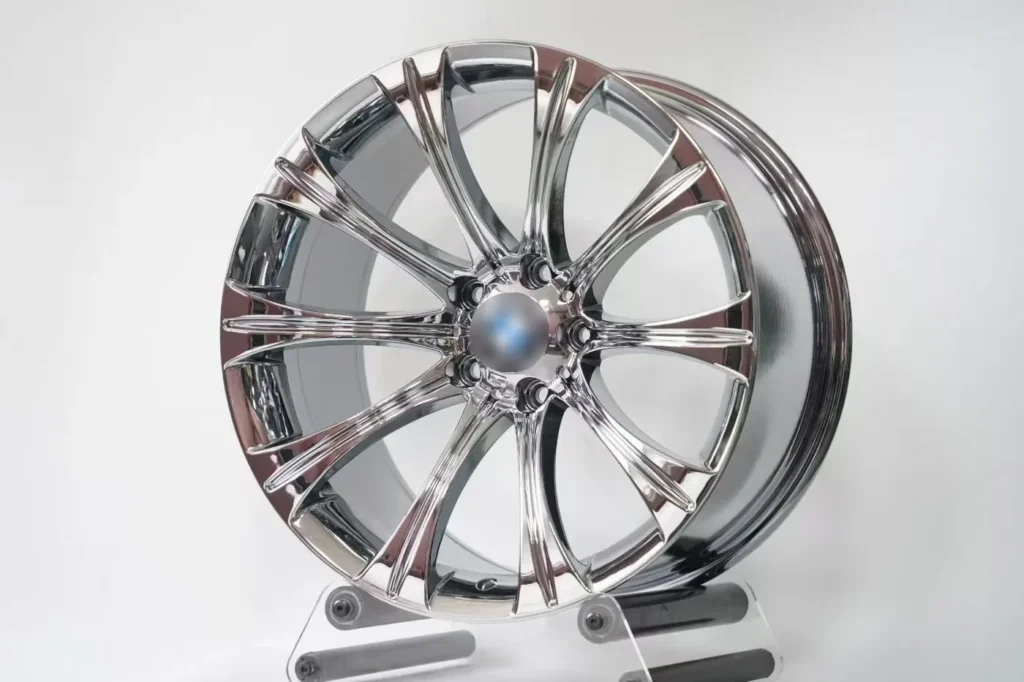
Aftermarket buyers often want a more open, sporty look. The practical compromise is a design with flatter spoke faces, narrower gaps near the rim, or a slightly concave face that keeps airflow smoother. A custom forged wheel can balance appearance and efficiency, but any open design will usually trade some range for style. Our article on forged wheel concavity and spoke design shows how face shape is developed.
Get a quick forged wheel quote
Send your vehicle, wheel size, PCD, offset, finish and quantity. We confirm fitment and reply within 24 hours.
Wheel Size, Range and Noise
Bigger wheels look striking on an EV, but they usually come with wider, heavier tires and a larger frontal area. That combination tends to reduce range and can increase road noise. Smaller wheels with taller sidewalls generally ride more quietly and absorb impacts better.
| Choice | Typical effect on an EV | What to check |
|---|---|---|
| Larger diameter | Sharper look, often less range | Tire load index, ride, noise |
| Wider tire | More grip, more rolling resistance | Approved rim width range |
| Closed or flat face | Lower drag, cleaner airflow | Brake cooling needs |
| Open spoke face | Sportier look, more drag | Range priorities |
| Lighter forged wheel | Better ride and response | Agreed load rating |
Always check the tire maker’s approved rim width range for any tire you choose, and keep overall diameter close to original so speedometer and driver aids behave as intended.
Fitment Details That Matter on EVs
Electric vehicles often use large brake calipers, specific hub designs and wheel speed or tire pressure sensors that must work with new wheels. Fitment should start from verified vehicle data, not guesswork.
- PCD, center bore and lug seat type confirmed for the exact model
- Offset and width chosen to clear suspension and arches; our wheel offset calculator helps compare options
- Brake caliper clearance checked against the drawing
- TPMS valve position and sensor type agreed early
- Tightening to the vehicle maker’s torque spec after fitting and rechecking after a short drive
For popular electric models, our Model Y and Model 3 wheel sourcing guide covers the questions buyers usually raise.
Tires, Noise and Comfort on EVs
Because there is no engine sound to mask it, tire roar and wind rush around the wheels are more noticeable in an electric vehicle. Wheel choice influences this in several ways. A larger diameter with a lower-profile tire transmits more impact harshness and road texture into the cabin. A taller sidewall soaks up more of it.
Many EV-specific tires use foam inserts or special compounds to cut noise and rolling resistance, and they carry load indexes suited to heavier vehicles. When you change wheel size, check that an equivalent tire exists in the new size before you commit to the design. It is also worth confirming that the wheel is balanced carefully after mounting, since small vibrations feel more obvious in a quiet car.
How to Specify Custom Forged EV Wheels
A clear specification helps a factory engineer the right balance of weight, strength and aero. Share these points in your request:
- Vehicle model, variant and heaviest configuration you will fit
- Required load rating and any test standard your market expects
- Diameter, width, offset and brake clearance data
- Design priorities: range, look, weight or a balance
- Finish, center cap and logo requirements
Our engineers turn this into a drawing for written approval before any production starts, so load, fitment and appearance are confirmed together.
Get Custom Forged Wheels Built to Your Fitment
We build custom forged monoblock, 2-piece and 3-piece wheels to your fitment data, including EV programs where load and efficiency matter. Every project follows a drawing approved in writing, and MOQ, price basis and lead-time start point are confirmed in the written quotation.
Browse our forged wheel range, then request a quote by RFQ form, email or WhatsApp. We reply within 24 hours.
Frequently Asked Questions
Do EVs need special wheels?
EVs do not need a special category of wheel, but the wheel must be rated for the vehicle’s weight, which is often higher than a similar combustion car. Fitment, brake clearance and sensors must also match. Choosing a design with reasonable weight and aerodynamics helps protect range and ride comfort.
Do bigger wheels reduce EV range?
Usually, yes. Larger wheels tend to come with wider, heavier tires and more drag, which can reduce range. The effect depends on tire choice, wheel design and driving speed. If range matters most, keep the diameter close to original and choose an efficient tire within the approved size range.
Are forged wheels good for electric vehicles?
Forged wheels suit EVs well because forging produces strong, dense aluminum that can be machined to a lower weight for a given load rating. That helps ride and handling on a heavy vehicle. The key is engineering to the correct load rating rather than chasing the lowest possible weight.
Why do many EVs have flat wheel covers?
Flat or closed wheel faces reduce turbulence around the wheel and lower aerodynamic drag, which helps highway range. Vehicle makers often use them to improve efficiency figures. Aftermarket designs can keep some of that benefit with flatter spokes or smaller openings while still offering a sportier look.
What load rating should my EV wheels have?
The load rating should meet or exceed the vehicle maker’s requirement for that model, including its heaviest variant. We do not quote generic figures because they vary by vehicle. Share your vehicle data and any standard your market requires, and the rating and test plan will be agreed in writing.