
Quick answer: Choose a wheel finish by appearance, substrate preparation, environmental exposure, repair expectations and brand consistency—not by color name alone. Brushed clear and polished finishes highlight machining and surface quality. Powder coat offers broad color and texture options. Anodizing creates a conversion layer in the aluminum surface but needs tightly controlled alloy, preparation and color expectations. Two-tone finishes combine processes and therefore add masking, alignment and approval steps.
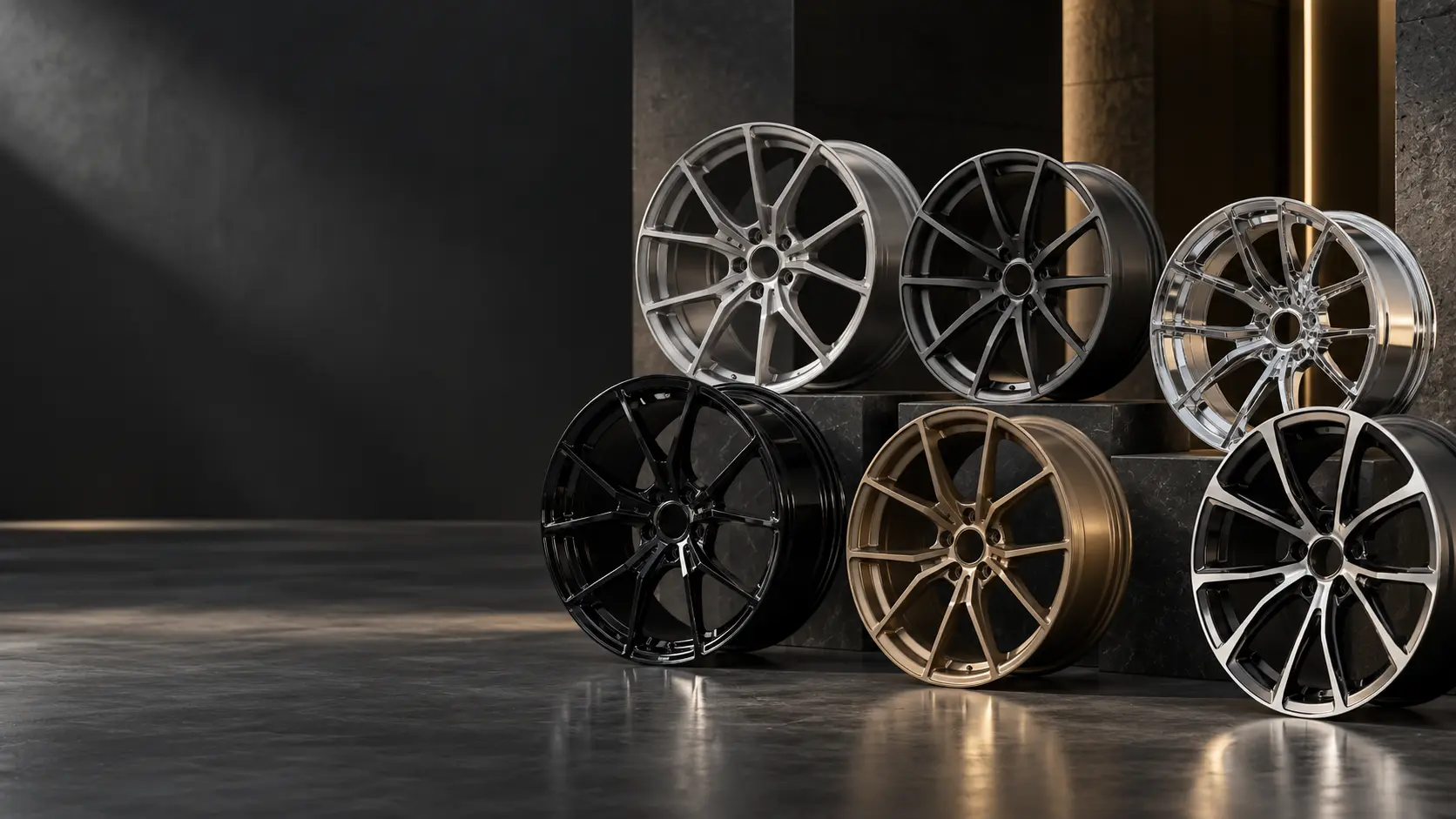
Custom Wheel Finish Types Compared
| Finish | Visual character | Useful applications | Main sourcing risk |
|---|---|---|---|
| Brushed + clear coat | Directional metallic grain under a protective clear layer | Luxury, performance and premium private-label collections | Brush direction, grain consistency, edge coverage and clear-coat appearance vary without a signed sample |
| Polished | Bright, reflective metal appearance | Show, luxury and classic design directions | Surface preparation and maintenance expectations are often underestimated |
| Powder coated | Solid or textured color with broad palette potential | Street, off-road and repeatable dealer colors | Color/texture, film build, masking and recoat instructions must be controlled |
| Anodized | Metallic transparent or colored conversion finish | Technical, lightweight and distinctive premium aesthetics | Alloy, surface condition and batch variation can affect shade |
| Painted / wet coat | Flexible color and effect options | OEM-style colors, special effects and matched brand themes | Color formula, primer/base/clear system and repair method must be documented |
| Two-tone / machined face | Contrasting spoke face, pockets, rim or accent areas | High-impact retail and private-label designs | Extra machining/masking stages increase alignment, edge and approval complexity |
Brushed Finish: Specify More Than “Brushed Silver”
A brushed finish exposes directional surface lines. The buyer should approve brush direction, grain level, exposed areas, base tone and clear-coat gloss. A flat wheel photo can hide differences at spoke transitions and pocket edges, so review angled images and a physical finish sample under more than one lighting condition.
Polished Finish: Appearance and Maintenance
Polishing produces a reflective metal surface through progressive preparation. Specify whether the polished surface is bare, clear-coated or combined with painted pockets, because the care and repair path changes. A polished wheel can show machining marks, handling scratches and water spotting more readily than an opaque coating if preparation and maintenance are not controlled.
Powder Coat: Color Is Only One Variable
- Color reference: use a physical panel, supplier code or agreed standard—not a phone-screen screenshot alone.
- Gloss and texture: define matte, satin, gloss or textured appearance with an approved sample.
- Film build: control critical interfaces so coating does not alter fit or fastener seating.
- Masking: identify mounting face, center bore, lug seats, threads and sealing/contact zones.
- Rework: agree how rejected coating is stripped and reapplied without harming the part.
Anodizing: Plan for Material and Batch Variation
Anodizing is not simply transparent paint. The surface preparation, alloy, prior machining, bath controls and sealing influence the result. Buyers should approve a realistic color range and ask whether different wheel components or production lots may show shade variation. A small sample panel may not reproduce every geometry-dependent appearance on a complete wheel.
Two-Tone Finishes: Build an Approval Map
Two-tone wheels may combine paint or powder with machining, brushing, polishing or a contrasting clear. Mark every finish zone on the drawing or a controlled color map. Define the transition line at spoke edges, windows, pockets, rim lips, logos and center caps. Ambiguous phrases such as “black with polished face” are not enough for repeat production.
Never Coat Critical Interfaces by Accident
| Area | Why it needs a masking/finish decision | What to approve |
|---|---|---|
| Hub mounting face | Coating can change seating or runout behavior | Bare/masked area and corrosion-handling process |
| Center bore | Film build can alter fit | Finished diameter and masking method |
| Lug seats | Clamping interface must match the hardware design | Seat profile and no-coat/machined requirement |
| Threads and assembly hardware | Coating can affect torque and assembly | Masking plus approved hardware finish |
| Tire bead/sealing area | Surface affects mounting and air seal | Specified rim treatment and inspection |
| Logo/serial marks | Finish can reduce legibility | Marking sequence, contrast and final acceptance |
Finish Sample Approval Process
- Select the wheel material, machining condition and finish system.
- Agree a color, gloss, texture and metallic-effect reference.
- Review a panel or component sample, noting that geometry can change appearance.
- Approve a complete first article when visual risk or retail positioning justifies it.
- Photograph the approved master under controlled lighting and retain the physical reference.
- Define acceptable batch variation, defect zones and inspection distance/lighting.
- Link the finish code and sample revision to the wheel drawing, SKU and carton label.
How Finish Choice Affects MOQ, Cost and Lead Time
Every separate color, gloss, two-tone map or center-cap treatment can become its own production batch and SKU. Complex masking, polishing, re-machining and repeated clear coats add process steps. Ask for MOQ and quotation by finish/SKU, not only by total wheel quantity, and confirm the current schedule after artwork and sample approval.
Explore the finish range described in the custom forged wheels program and view application directions in forged wheel projects. For branded ranges, connect the finish code to the private-label wheel program.
Frequently Asked Questions
Which wheel finish is easiest to keep consistent across repeat orders?
Opaque single-color systems are often easier to control than exposed-metal or multi-stage effects, but consistency still depends on preparation, formula, process limits and a retained master sample.
Is anodizing more durable than powder coating?
The answer depends on the anodizing or coating specification, preparation, environment and acceptance criteria. Do not compare process names without an exact finish system and test scope.
Can a scratched wheel finish be repaired locally?
Some finishes are more repairable than others, but a local repair may not match color, grain, gloss or layer structure. Agree the after-sales and refinishing method before launch.
Request Finish Options for Your Wheel Design
Send the wheel design, exposed and masked areas, target color/gloss, reference images or physical standard, quantity per finish, branding, destination and use environment. We can confirm the practical sample route before quotation.