Quick answer
Before approving a custom wheel, treat the rendering as a picture of the look and the technical drawing as the contract. On the drawing, check diameter, width, PCD, offset, center bore, seat type, brake clearance, load requirement, centre cap and finish against your own measurements. Ask about anything unclear, and approve only when every value matches in writing.
Many buyers describe the same nervous moment: the factory has sent a beautiful rendering and a drawing full of numbers, asks for approval, and once you say yes the wheels go into production. What if one figure is wrong? Most people are not engineers, and it is easy to approve a picture without really checking the specification.
The good news is that you do not need to read every line like an engineer. You need to know which values decide fit and safety, and how to compare them with your own vehicle data. This guide walks through what to check on the rendering, what to check on the drawing, and the mistakes buyers most often miss.
Approving a Custom Wheel Drawing
Check the look, then the numbers, then sign off in writing
- 1. Review rendering
- 2. Check fitment
- 3. Confirm brakes
- 4. Cap and finish
- 5. Approve in writing
Rendering vs Drawing: Know the Difference
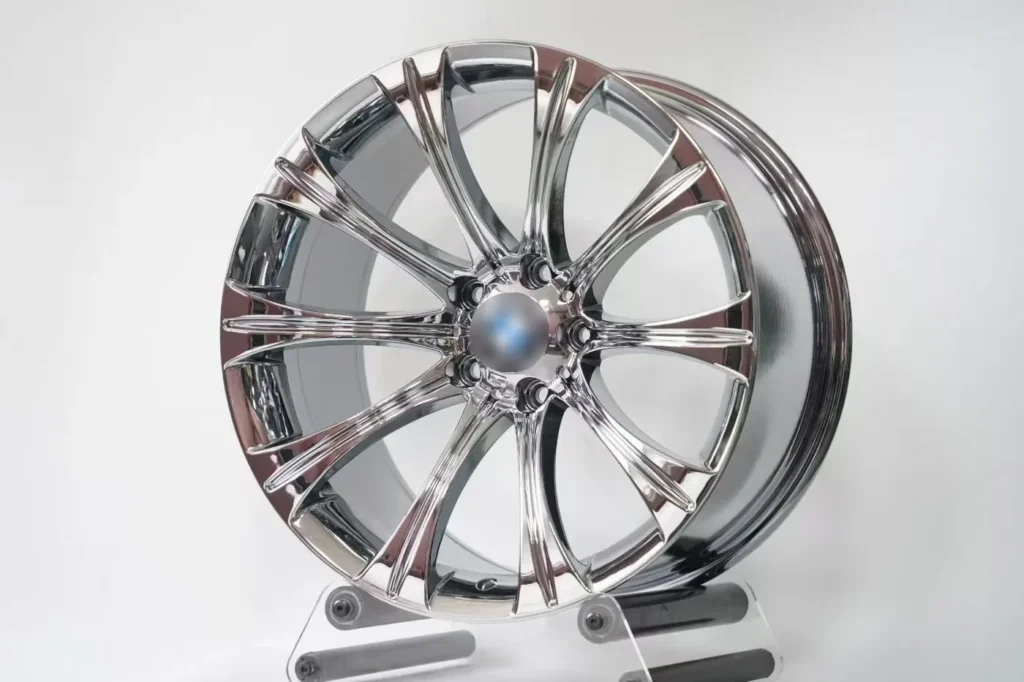
A rendering is a realistic image of the finished wheel. It shows spoke style, colour, finish and how the wheel will look on the car. It is useful for approving the design, but it is not a precise specification, and lighting or camera angle can make concavity and colour look different from reality.
A technical drawing is a dimensioned view, usually a front view and a cross-section, listing the measurements and tolerances the factory will machine to. This is the document that controls fit. When a supplier asks you to approve, make sure you are approving both, and that the drawing, not just the rendering, carries your written confirmation.
Our guide on how to read a forged wheel drawing and spec sheet explains the common symbols and views.
The Core Fitment Numbers to Check
These values must match your vehicle exactly. Compare each one with your own measurements or the vehicle maker’s data, not with what the seller suggested:
| Value | What it controls | What to check |
|---|---|---|
| Diameter and width | Tire size and stance | Matches your tire plan |
| PCD (bolt pattern) | Whether the wheel bolts on | Stud count and circle |
| Offset (ET) | Inner and outer position | Suspension and arch clearance |
| Center bore | Centring on the hub | Hub size or ring plan |
| Seat type | Nut or bolt contact | Conical, ball or flat |
| Load requirement | Safe carrying capacity | Suits your axle load |
If you are unsure of any value, use the wheel offset calculator and the offset, PCD and center bore guide before approving.
Check Brake Caliper Clearance Carefully
Brake clearance is the fitment problem buyers most often discover too late. Large performance calipers, big brake kits and some EV brake setups need space both behind the spokes and inside the barrel. A wheel can have the right PCD and offset and still touch the caliper.
The drawing should show the inner profile of the spokes and the barrel. Ask the factory to check it against a caliper template or your caliper measurements. Useful steps include:
- Tell the factory exactly which brakes are fitted, including any upgrade kit
- Provide caliper measurements or a template if you have one
- Ask for the minimum clearance between spoke back and caliper
- Ask for the barrel clearance at the caliper’s widest point
If the factory cannot confirm clearance, ask why before you approve.
Concavity, Spoke Profile and the Rendering
The rendering is where you judge the look, but check that it matches the drawing. Deep concave faces depend on width and offset: the same design at a different offset can look flatter or deeper. If the rendering shows a dramatic profile, confirm that your chosen width and offset actually allow it.
Look at the spoke count, the spoke ends at the lip, the window shapes and the lug area. Ask for side and angled views if only a straight-on image is provided. A good factory will explain how much concavity your fitment allows before you commit.
Planning a real wheel project? Get an accurate quote
We reply within 24 hours. To get a precise quote (not a guess), include:
- Vehicle and wheel size
- PCD, offset and center bore (if known)
- Construction and finish
- Quantity per SKU and destination country
Centre Cap, Logos and Branding
The drawing or a separate sheet should show the centre cap size, mounting method and logo. Check that the cap does not interfere with the hub and that its diameter suits the centre bore area.
Use only branding you own or have permission to use. Do not ask a factory to reproduce another brand’s logo, centre cap or OEM badge, even if a seller offers to. Replica branding exposes the buyer and any reseller to trademark risk, and customs authorities in many countries can seize counterfeit goods. Your own logo, a plain cap or an unbranded design are the safe options.
Finish, Colour and Hardware Details
Finish problems are the second most common source of disputes after fitment. Confirm in writing:
- The finish type, such as brushed, polished, painted, powder coated or two-tone
- The colour name or code, plus a physical sample or reference photo if colour matters
- Gloss level: matte, satin or gloss
- For 2-piece and 3-piece wheels, the hardware finish and bolt style
- Any machined or engraved details on the lip or spokes
Colours on screens vary, so a rendering alone is not a reliable colour reference. See custom wheel finish types for the options.
Mistakes Buyers Often Miss
Common errors include approving front and rear specs that were swapped on a staggered set, accepting a center bore larger than the hub without planning hub-centric rings, overlooking the lug seat type, and assuming the wheel will clear an upgraded brake kit. Another is approving a revised drawing without noticing that a value changed between versions.
Ask the factory to mark revisions clearly and to state the revision number on each drawing. Approve the final version by name and date, and keep a copy in the same written thread as your quotation.
Questions to Ask Before You Sign Off
Before you send your approval, a short list of written questions can catch most remaining problems. Ask the factory to answer each one in the same message thread as the drawing:
- Is this drawing for the front axle, the rear axle or both?
- Which vehicle, model year and brake system was it checked against?
- What load requirement was the design based on?
- Are hub-centric rings needed, and are they included?
- Which lug nuts or bolts suit the seat type shown?
- Does the quoted finish match the rendering exactly?
It is also worth asking a professional tire or wheel shop to look over the key numbers, especially if you are fitting a staggered setup, a big brake kit or a lowered suspension. A few minutes of review costs far less than a set of wheels that cannot be fitted. Once every answer matches your expectations, approve the named revision in writing.
Get Custom Forged Wheels Built to Your Fitment
Custom Wheel Hub builds custom forged monoblock, 2-piece and 3-piece wheels in Dongguan, China. We prepare a drawing from your fitment data, including PCD, offset, center bore, width, diameter and brake clearance, and start production only after you approve it in writing. Custom finishes, centre caps, your own logos and branded packaging are available.
Explore our forged wheel range and send your vehicle details through the quote form. We reply within 24 hours, and you can also reach us by email or WhatsApp.
Frequently Asked Questions
Is approving the rendering enough to start production?
No. The rendering shows the design and finish, but the technical drawing controls the dimensions the factory machines to. Always approve the drawing in writing, including PCD, offset, center bore, width, diameter, seat type and brake clearance. Approving only a picture leaves the key fitment values open to misunderstanding.
What if I do not know my offset or center bore?
Check your vehicle maker’s data or measure your current wheels, then confirm the figures with an offset or center bore calculator. A professional wheel or tire shop can also measure for you. Do not approve a drawing until you are confident the numbers match your vehicle and planned tire size.
How do I know the wheel will clear my brakes?
Tell the factory exactly which brake system you have, including any upgrade kit, and supply caliper measurements or a template. Ask the factory to confirm the clearance behind the spokes and inside the barrel. If clearance is tight or unclear, ask for an adjusted design before you approve.
Can I use a well-known brand logo on my centre caps?
Only if you own that brand or have written permission. Reproducing another brand’s logo, cap or badge can infringe trademarks, and counterfeit goods may be seized by customs. Use your own logo, a plain cap or an unbranded design instead. A responsible factory will recommend the same.
What should I do if I spot an error after approving?
Contact the factory immediately in writing and reference the drawing revision. If machining has not started, a correction may still be possible, although it can affect timing and cost. This is why careful checking before approval matters, and why every revision should carry a clear number and date.