When sourcing custom forged wheels, buyers often ask whether 7075-T6 or 6061-T6 aluminum is the better option. The useful answer is not that one alloy is always better. The correct choice depends on the wheel design, vehicle application, load requirements, finish direction, target market and the engineering validation required for the finished product.
This guide explains the practical differences between 7075-T6 and 6061-T6 forged aluminum for wheel buyers, importers, performance shops and private-label brands. It is intended to help you ask more useful questions before confirming a forged wheel specification.
Important: Material selection alone does not determine whether a wheel is suitable for a vehicle. Wheel design, dimensions, machining, heat treatment, load rating, testing, fitment and intended use must all be considered together before production.
What Are 6061-T6 and 7075-T6 Aluminum?
6061 and 7075 are two different aluminum alloy families. Both are used in industries that require lightweight metal components, and both can be used as starting materials for forged and CNC-machined products. Their composition, corrosion behavior, material strength and processing characteristics are different.
The “T6” designation refers to a heat-treatment condition. In simple terms, it describes a controlled treatment process intended to develop the material properties required for the specified alloy condition. For custom forged wheel buyers, the key point is that the alloy name and temper should be supported by the supplier’s material and production documentation.
| Topic | 6061-T6 | 7075-T6 |
|---|---|---|
| Alloy Family | Aluminum alloy commonly associated with magnesium and silicon. | Aluminum alloy commonly associated with zinc, magnesium and copper. |
| General Positioning | Often selected for balanced processing, finish and corrosion considerations. | Often selected where higher-strength material properties are part of the engineering requirement. |
| Corrosion Consideration | Often regarded as a practical choice where corrosion resistance is important. | May require additional attention to finish and environmental exposure depending on the application. |
| Commercial Role | A common forged-wheel material choice for a wide range of custom projects. | A premium material option for projects with specific engineering or product-positioning requirements. |
| Buyer Decision | Choose based on the approved wheel design and vehicle requirements. | Choose only when the finished wheel specification supports the decision. |
Why Alloy Choice Matters for Custom Forged Wheels
Forged wheels are not sold as raw aluminum. They are finished products created through material selection, forging, machining, design, surface finishing and fitment planning. The alloy affects the material side of the project, but the final wheel must still be engineered and evaluated as a complete product.
- Wheel design and spoke geometry.
- Wheel diameter, width and overall mass.
- Vehicle weight and intended use.
- PCD, center bore, ET offset and mounting design.
- Brake clearance and tire package.
- Surface finish and environmental exposure.
- Load requirements and destination-market expectations.
- Private-label positioning and target retail price level.
When 6061-T6 May Be Considered
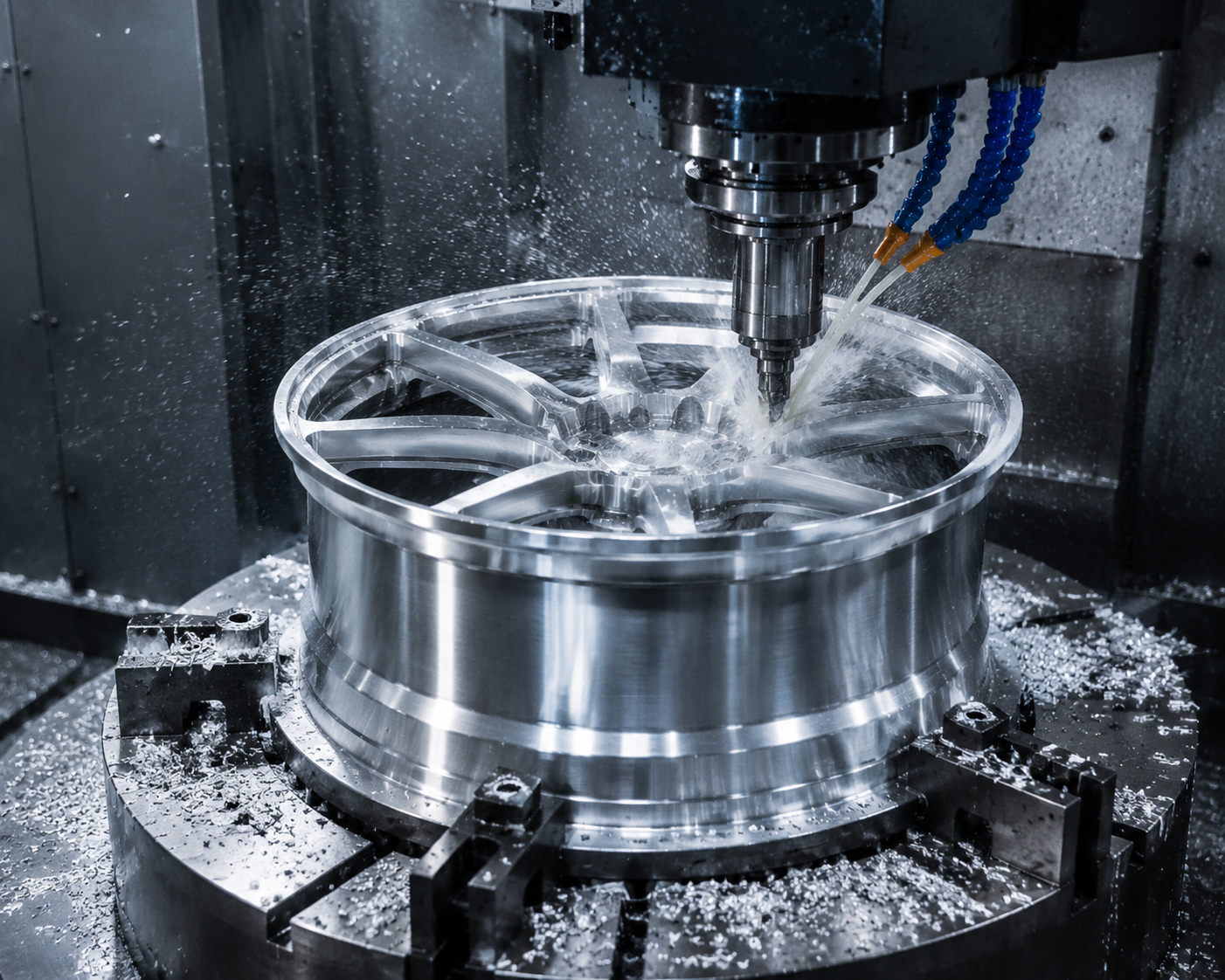
6061-T6 is commonly discussed for forged wheel projects that need a balanced material choice alongside custom machining, finish selection and practical wholesale positioning. It can be relevant for a broad range of luxury, performance, EV and SUV wheel projects when supported by the approved wheel design and application requirements.
Typical Buyer Considerations
- You are building a repeatable monoblock forged wheel collection for multiple vehicle applications.
- Your target customers need premium custom wheels with a practical retail price position.
- You want to focus on finish consistency, fitment options and branded center caps.
- Your market includes everyday luxury, EV, SUV or performance vehicle buyers.
- You want to create a private-label wheel program with selected wheel styles and finishes.
- The final wheel design and validation process support the proposed material specification.
When 7075-T6 May Be Considered
7075-T6 may be discussed for wheel projects where the buyer, designer or engineering process requires a higher-strength alloy family as part of the finished wheel specification. It is often considered for premium, specialized or performance-oriented product positioning, but it should not be selected only because a vehicle carries a performance badge.
Typical Buyer Considerations
- You are developing a specialized premium forged wheel collection.
- Your project has specific engineering, load or performance requirements.
- You need to discuss the material choice alongside wheel design and validation requirements.
- You want to position a product line for advanced performance or specialist vehicle builds.
- You are prepared to confirm the finish and environmental requirements for the intended market.
- The supplier can document the material specification for the exact wheel project being quoted.
Material Selection Is Not a Vehicle Brand Shortcut
A common sourcing mistake is to assign one alloy to every vehicle brand or every performance model. This is not a reliable way to specify wheels. Two vehicles from the same brand can have different wheel dimensions, load requirements, brake packages, driving use and customer expectations.
Instead of asking “Which alloy does this brand use?” ask the supplier or engineering team the following questions:
- What material is proposed for this exact wheel design?
- What vehicle application, wheel size and load requirements are being considered?
- How will the wheel specification be confirmed before production?
- What finish is recommended for the destination environment?
- What documentation can be provided for the material and finished wheel specification?
- Does the proposed design support the requested PCD, offset, center bore and brake clearance?
Corrosion, Finish and Environmental Exposure
The wheel finish is not only a visual decision. It also affects how the product is presented and maintained in different climates. Buyers selling into coastal, wet, snowy or road-salt environments should discuss finish options and care requirements with the supplier.
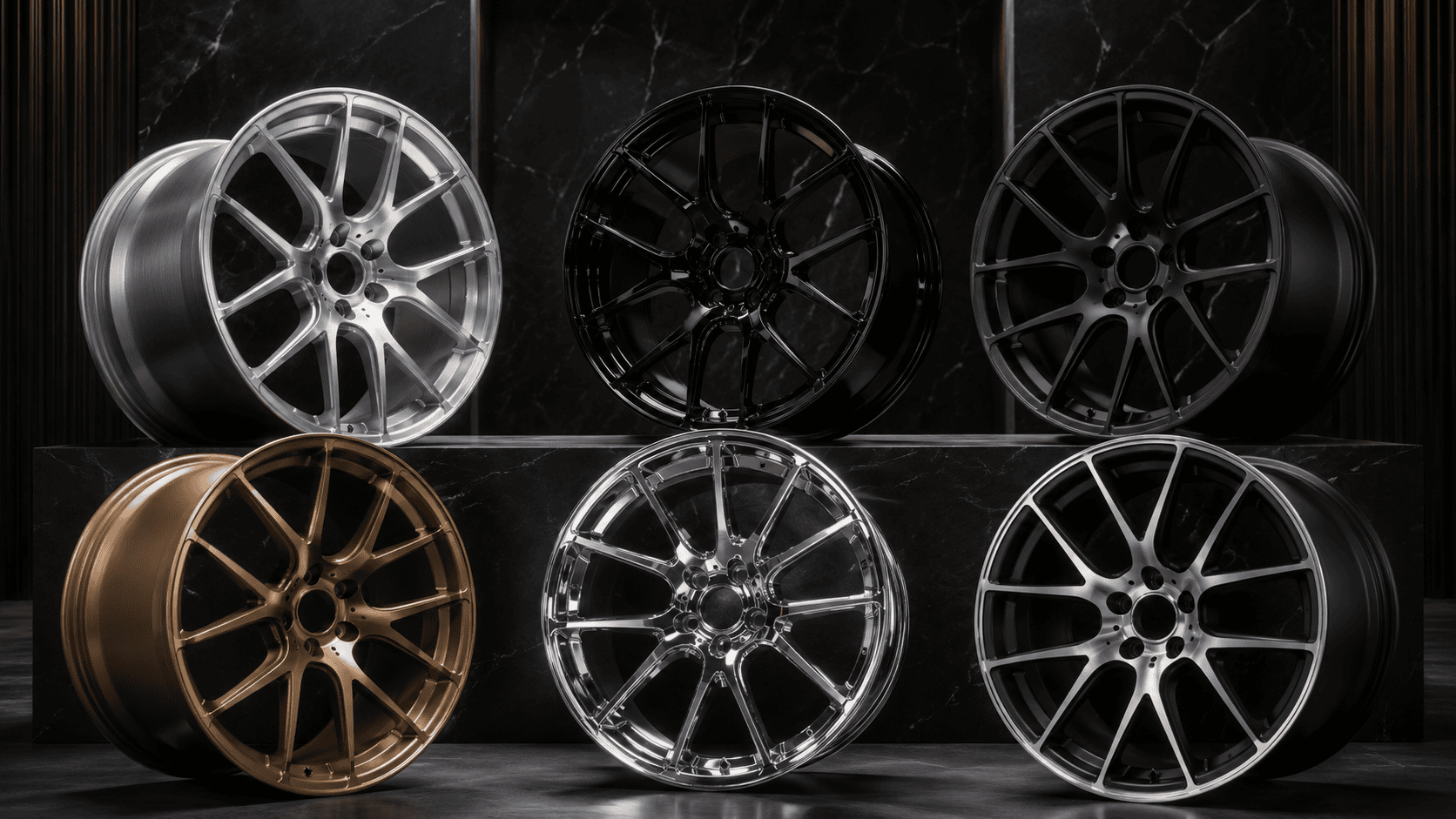
| Finish Direction | Commercial Use | Buyer Discussion Point |
|---|---|---|
| Gloss Black | Popular for luxury, EV and performance wheel collections. | Confirm the approved color reference and surface appearance. |
| Matte or Satin Black | Suitable for restrained performance and SUV styling. | Confirm cleaning and care expectations for the finish. |
| Satin Bronze | Used for motorsport-inspired and enthusiast wheel designs. | Review visual consistency across the product range. |
| Brushed Silver | Premium finish direction for luxury and private-label products. | Confirm brushing pattern and protective surface treatment. |
| Machined Face | Creates contrast between machined and painted wheel areas. | Confirm the approved sample and expected visual result. |
| Two-Tone Finish | Useful for distinctive branded wheel collections. | Document paint, machining and logo details clearly. |
What to Request From a Forged Wheel Supplier
For a B2B forged wheel order, ask the supplier to connect the material discussion to a complete product specification. This makes it easier to compare quotations and prevents a vague “forged aluminum” claim from becoming the only technical detail in the order.
- Written material specification for the proposed wheel project.
- Wheel type, design reference and approved dimensions.
- Wheel diameter, width, PCD, center bore and ET offset.
- Vehicle application and any brake-clearance requirements.
- Finish reference, center-cap artwork and branding requirements.
- Product-specific documentation available for the intended market.
- Sample, drawing approval or pre-production review process where appropriate.
- Protective packing and shipping requirements for the order.
How Private Label Buyers Should Use Alloy Information
For a private-label wheel brand, alloy information should support a clear and accurate product story. Do not use material language as a substitute for real product documentation or fitment confirmation. A strong private-label collection combines a defined wheel platform, approved fitments, consistent finishes and transparent product information.
- Create separate product pages for monoblock, 2 piece, 3 piece and off-road forged wheels.
- Publish only material claims that are supported by your supplier documentation.
- Use vehicle fitment pages to collect exact buyer specifications.
- Keep product descriptions focused on fitment, finish, design and intended application.
- Document the final wheel specification for each SKU in your private-label catalogue.
7075-T6 vs 6061-T6 Forged Wheels FAQ
Is 7075-T6 always better than 6061-T6 for forged wheels?
No. The correct alloy depends on the finished wheel design, vehicle application, load requirements, finish direction, intended use and engineering validation. Material choice should be part of a complete wheel specification.
Can 6061-T6 be used for custom forged wheels?
6061-T6 is commonly considered for a range of custom forged wheel projects. The final suitability depends on the approved wheel design, dimensions, vehicle application and relevant technical requirements.
Should a private-label wheel brand list the alloy on its website?
You can list material information when it is supported by supplier documentation for the exact wheel product. Avoid general claims that apply the same material or performance statement to every wheel design without verification.
What information should I send to discuss forged wheel alloy options?
Send the target vehicle, wheel type, diameter, width, PCD, center bore, offset, tire plan, intended use, finish preference, quantity, destination country and any private-label requirements.
DISCUSS YOUR FORGED WHEEL SPECIFICATION
Send Your Vehicle Application and Wheel Requirements
Send your target vehicle, wheel type, size, PCD, ET offset, center bore, finish, quantity and destination country. Custom Wheel Hub will help organize a practical custom forged wheel quotation.
Get a quick forged wheel quote
Send your vehicle platform, wheel size, PCD, offset, finish and quantity. We confirm fitment and reply within 24 hours.
Ready to Source Forged Wheels?
- Custom Forged Wheel Manufacturer — one-off and OEM custom projects
- Private Label Forged Wheels — your brand, caps and packaging
- Forged Wheel Dealer & Wholesale Program — for distributors, shops and online retailers
Send your vehicle, size, PCD, ET, center bore, finish, quantity and destination through our quote request form.