
Quick answer: Select forged off-road wheels for a Ford F-150 or Raptor from the exact generation, trim, axle rating, tire package and intended use. Load rating comes before style. After that, verify PCD, center bore, stud/nut interface, diameter, width, offset/backspacing, brake clearance and TPMS. A decorative simulated-beadlock ring and a functional beadlock system are not interchangeable.
Start With Vehicle Load, Not a Generic “Truck Wheel” Label
For U.S. vehicles at or below 10,000 lb GVWR, 49 CFR 571.110 defines vehicle maximum tire load from axle load distribution and requires the sum of tire ratings on a truck or multipurpose passenger vehicle axle to meet the GAWR shown on the certification label. That rule is about tire and rim selection at the vehicle level; it is a useful reminder that a wheel project should begin from the actual axle and vehicle data rather than a simple GVWR ÷ 4 shortcut.
Use the driver-door certification/tire label, owner documentation and exact build data. Accessories, towing tongue weight, cargo and off-road impacts can change the use case, but they do not authorize inventing a higher wheel rating.
F-150 and Raptor RFQ Inputs
| Area | Information to provide | Why it matters |
|---|---|---|
| Vehicle | Year, generation, trim, cab/bed, drivetrain and axle | Avoids treating all F-150 platforms as one fitment |
| Load/use | Front/rear GAWR, towing/cargo use, accessories and terrain | Sets the engineering and validation brief |
| Wheel | Diameter, width, PCD, center bore, offset/backspacing | Defines mounting and vehicle position |
| Brake | OE or upgraded brake package and clearance data | Controls inner barrel and spoke profile |
| Tire | Size, load/speed specification and intended pressure/use | Links the rim to the complete wheel-and-tire system |
| Beadlock | Simulated, beadlock-capable or functional system | Changes design, hardware, service and use requirements |
Offset and Backspacing for Off-Road Builds
Offset and backspacing decide how far the wheel sits inward and outward. A more aggressive outward position may create the desired stance, but it can also increase body contact risk and alter clearance at steering lock. A wheel pulled too far inward can contact suspension or brakes. Tire section width and actual mounted shape must be included in the check.
Use the wheel offset calculator to compare proposed positions. Then check full steering lock, suspension compression, bodywork, control arms and any lift or leveling hardware.
Beadlock, Beadlock-Capable and Simulated Beadlock
| Type | What it means | Best use | Buyer checkpoint |
|---|---|---|---|
| Functional beadlock | A mechanical ring clamps a tire bead using a defined wheel/hardware system | Specialized off-road or competition use where the exact system is appropriate | Confirm tire compatibility, hardware, torque/inspection procedure and local-road rules |
| Beadlock-capable | Wheel is designed to accept a specified functional ring/configuration | Buyers who may convert or configure the wheel under approved instructions | Confirm what parts and instructions are required before calling it functional |
| Simulated beadlock | Ring/bolt styling does not clamp the tire bead | Street-oriented appearance without beadlock service complexity | Market it accurately as cosmetic; do not imply functional retention |
Wheel Diameter, Tire Sidewall and Brake Package
An off-road wheel is a system choice. Smaller wheel diameters can create more tire sidewall, but the inner barrel still has to clear the brake package. Larger diameters can change tire availability, mass, ride and body clearance. Select the tire first or in parallel, then verify rim-width range, load, speed, brake, steering and suspension requirements.
Design and QC Questions for a Truck Program
- What wheel load is stated on the controlled drawing and permanent marking?
- Which exact vehicle/axle and tire assumptions were used?
- Which structural test or market document applies to this part number and size?
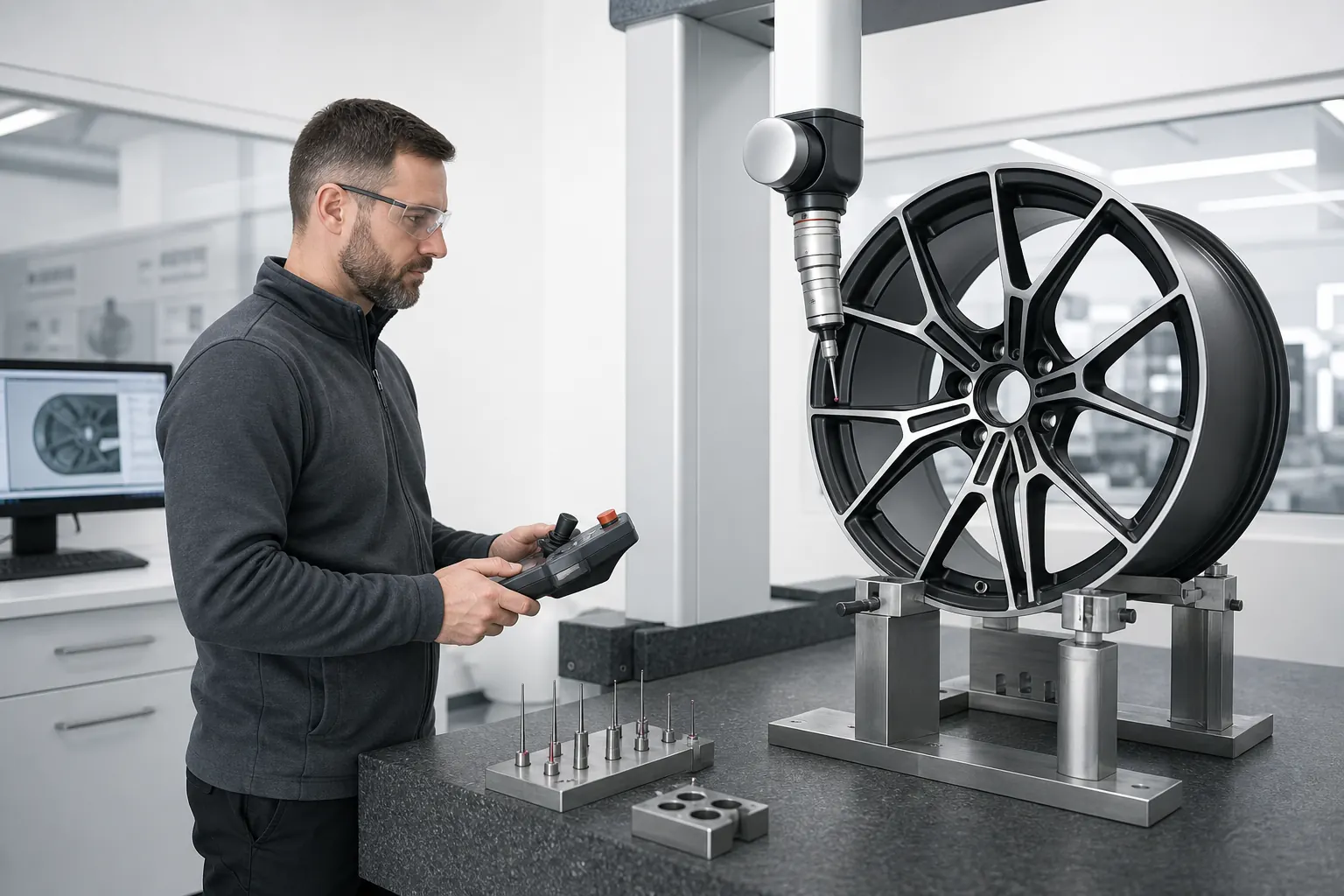
- How are PCD, bore, offset, runout, finish and markings inspected?
- For a functional beadlock, what ring, fastener, torque sequence, recheck and service instructions apply?
- Are replacement hardware and after-sales instructions available for the exact wheel?
- How are wheel SKU, drawing revision, carton and inspection record linked?
F-150 / Raptor Buyer Checklist
- Record the certification-label axle data and exact vehicle configuration.
- Define towing, cargo, accessories, off-road and street-use requirements.
- Confirm generation-specific PCD, center bore and fastener details.
- Select tire and wheel diameter/width as one package.
- Calculate offset/backspacing changes and inspect full-motion clearances.
- Choose simulated, capable or functional beadlock terminology accurately.
- Approve a drawing, marking plan and applicable test/document scope.
- Confirm installation and service instructions before resale.
Explore custom forged off-road wheel options and examples in the off-road project section.
Sources and verification notes
- 49 CFR 571.110 — Tire selection and rims — current eCFR source for GAWR and tire/rim-selection context
- Ford Performance Parts — official catalog uses beadlock-capable terminology for applicable products; confirm the exact part and instructions
Frequently Asked Questions
Is GVWR divided by four enough to choose wheel load rating?
No. Axle loading can be uneven, and vehicle configuration and intended use matter. Start from front/rear axle data and the exact engineering/test requirements.
Are beadlock wheels street legal?
Rules and approvals vary by jurisdiction and by the exact wheel. Confirm local requirements and product documentation before road use or resale.
Can one F-150 wheel fit every generation and Raptor trim?
Do not assume so. Verify generation, PCD, center bore, hardware, brake package, offset, load and tire clearance for each SKU.
Ford, F-150 and Raptor are trademarks of their respective owner. This independent sourcing guide does not imply affiliation or vehicle-manufacturer approval.
Build an F-150 or Raptor Wheel Specification
Send the year, trim, axle data, current wheel/tire, brake package, target size, offset/backspacing, beadlock direction, use case, quantity and destination. We will organize the questions required before a project-specific quote.